- Venue: book 9–12 months out (12–18 for peak dates). Everything else depends on having this confirmed first.
- Décor & florals: book second, not fourth. Good décor houses hold peak weekends just as tightly as photographers do.
- Photographer: 8–10 months out. If they're booked, ask for a referral. Don't cold-search.
- Wedding gown: 6–9 months for custom. Off-the-rack still needs 8 weeks minimum for fittings and alterations.
- Groom's suit: 3–5 months. Bespoke needs 8–12 weeks. Don't leave it until the month before.
- Sound & PA: confirm with your venue early. Good sound hire companies in Nairobi are in short supply.
- MC: 4–6 months. Chronically underestimated. The best ones book just as fast as photographers.
- Registry & legal: start 3–6 months out. If a lawyer is involved, begin 4–5 months out.
- Already behind? Confirm venue first, then call your photographer and décor house this week, not this month.
The vendors you want most are probably already booked for your date. Not because you were slow, but because the Nairobi wedding market works on a timeline that most newly engaged couples don't realise until they're already three months in and fielding "sorry, we're fully booked" replies.
Here is a scenario I encounter regularly as a Nairobi wedding planner. A couple gets engaged in January, spends the first two months in the beautiful fog of being newly engaged, sharing the news, celebrating, looking at inspiration on Pinterest. By March, they're ready to start booking. They reach out to the photographer whose work they've admired for two years, the décor house whose florals have been at every wedding they've attended, the MC who made their friend's reception unforgettable.
Three of the four come back fully booked.
The date, a Saturday in December, was claimed by other couples back in February, some of them even earlier. This is not an edge case. It is the ordinary reality of planning a wedding in Nairobi. This guide exists to help you avoid that situation. If you're reading this already behind, this will tell you exactly what to do.
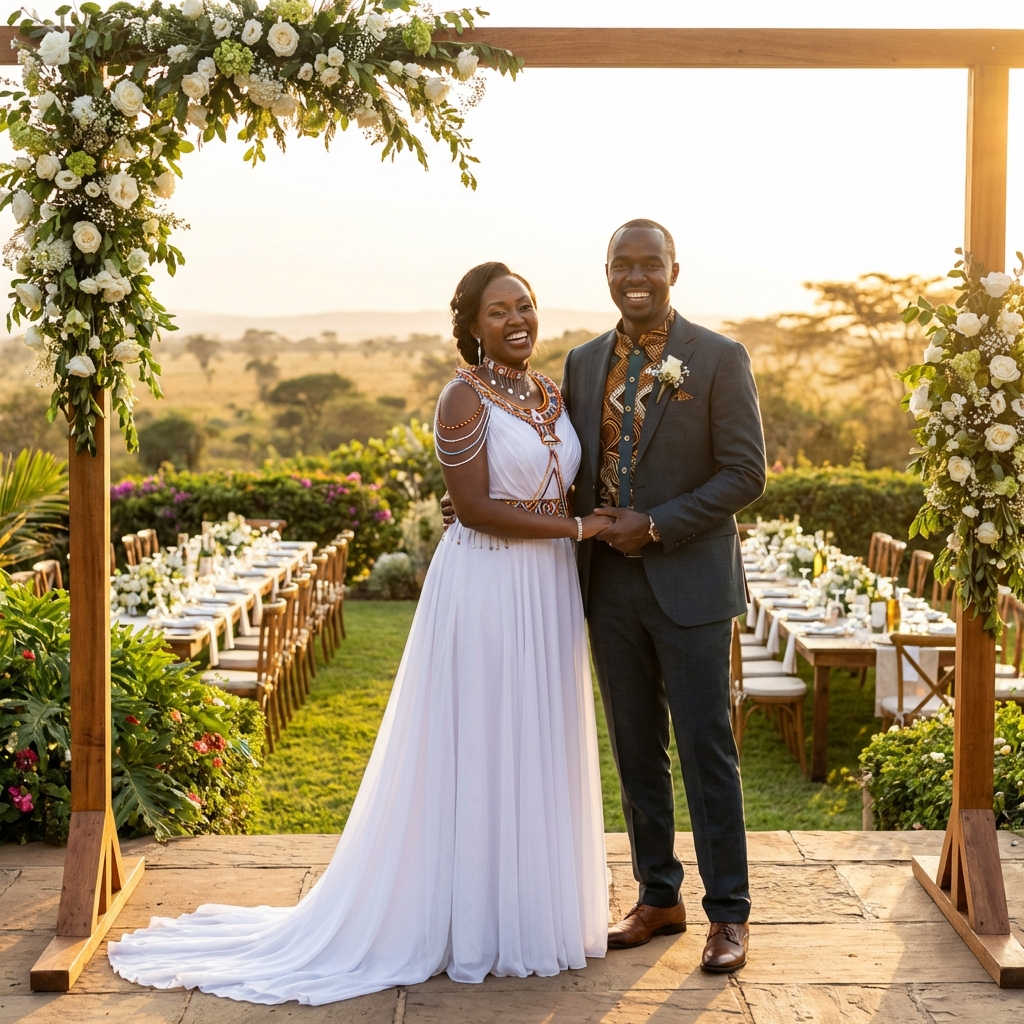
Why Nairobi's vendor market is different from what you've read online
Most wedding planning advice, including the articles that come up first on Google, is written for the UK, US, or South African market. The timelines they suggest (six months for most vendors, twelve for venues) are based on markets with dozens of competing suppliers at every budget level, distributed demand across fifty-two weekends a year, and mature vendor networks that can absorb last-minute bookings.
Nairobi is a different market. The pool of established, high-quality vendors at any given budget level is smaller than it looks. When you filter for proven track record, professional conduct, and a good portfolio, the shortlist narrows quickly. The same photographer whose work you love is almost certainly on the shortlist of fifty other couples planning their wedding for the same year.
Demand is also heavily concentrated. Three periods drive the bulk of Nairobi's wedding bookings: the December–January window, the August school holiday weekend cluster, and Easter. A top-tier photographer or MC might do forty to sixty weddings a year. If fifteen of those are in December alone, they are effectively sold out of December by mid-year.
The deposit system seals dates fast. Most Nairobi vendors require a 30–50% deposit to hold a date, and they do not hold dates speculatively. Once that deposit is paid by another couple, the date is gone. There is rarely a waitlist that comes good. This is the context behind every timeline recommendation in this article.
The master booking timeline
Use this as your reference point. For peak season dates, December, January, and August, add two to three months to every figure in the "book this far ahead" column.
| Vendor | Book this far ahead | Peak dates (Dec/Jan/Aug) | Priority | If you're already behind |
|---|---|---|---|---|
| Venue | 9–12 months | 12–18 months | Book first | Call your top 3 today. Every day of delay costs you real options. |
| Décor & florals | 4–6 months | 6–8 months | Book second | Under 3 months out? Call three houses this week, not this month. |
| Photographer | 8–10 months | 10–12 months | Book third | Ask your first choice for referrals. They know who's at their level. |
| Videographer | 6–8 months | 8–10 months | Alongside photographer | Photo and video pairs often book together. Ask your photographer first. |
| Wedding gown | 6–9 months | 8–10 months | Book early | Custom orders cannot be rushed. Off-the-rack still needs 8 weeks minimum for fittings. |
| Groom's suit | 3–5 months | 4–6 months | Mid-priority | Bespoke needs 8–12 weeks. Even off-the-rack needs alterations, so don't leave it to the last month. |
| Caterer | 4–6 months | 6–8 months | Mid-priority | Confirm guest count first, as caterers need a headcount to quote realistically. |
| Sound & PA | 3–5 months | 5–6 months | Before the DJ | Good sound companies are in short supply. Do not assume this is easy to find late. |
| MC | 4–6 months | 6–8 months | Do not leave late | Good MCs book fast. Under 4 months out, this is urgent. |
| DJ / band | 3–5 months | 5–6 months | Mid-priority | More flexibility here, but live bands book earlier than DJs. |
| Cake | 2–3 months | 3–4 months | More flexible | Most bakers accommodate 6–8 weeks out for standard designs. |
| Transport | 2–3 months | 3–4 months | More flexible | Confirm the specific cars, not just the company. |
| Day-of coordinator | 3–6 months | 6+ months | Before the MC | If your date is under 3 months away, call today. |
| Registry / legal | 3–6 months | Same | Do not leave last | Documents take time. If a lawyer is involved, start 4–5 months out. |
Venue: book this one first, always
9–12 months For peak dates, start at 12–18 months. Nothing else can move forward until your venue is confirmed.
Your venue dictates everything else. The date is tied to the venue. The catering structure, whether in-house or external, is set by the venue. The décor constraints, ceiling height, whether you can bring in your own flowers, how late the event can run. All of this is determined by the venue. Until you have a confirmed venue, every other vendor conversation is speculative.
In Nairobi, the venues that couples most want, including Windsor Golf Hotel, Tribe Hotel, Ole Sereni, Hemingways Nairobi, Giraffe Centre, and the Karen-area gardens, operate at genuine capacity on peak dates. December Saturdays at these properties often fill twelve to eighteen months in advance. If you're planning a December 2027 wedding and you're reading this in early 2026, the conversation should have already started.
For mid-tier and garden venues, the timeline is more forgiving. Six to nine months is usually sufficient. But don't confuse "more flexible" with "no urgency." Once your date is gone from a venue, it's gone. If you are still shortlisting options, our guide to affordable wedding venues in Nairobi below KES 60,000 covers a range of properties by budget and guest count.
- What is included in the venue hire fee, including tables, chairs, linens, security, and parking
- Whether they have an approved caterer list or allow fully external catering
- Maximum capacity for your specific layout, not their stated headline figure
- Cut-off time for music and whether there are noise restrictions
- Whether there is a covered or indoor backup for outdoor spaces if it rains
- Whether the venue has its own PA system or requires you to bring one
For a full list of what to ask before committing, see 13 questions to ask before booking a Nairobi venue.
- Book before any other vendor. Your date, catering rules, and décor constraints all flow from the venue.
- Top Nairobi venues fill December Saturdays 12–18 months in advance. Start earlier than feels necessary.
- Confirm PA situation, noise curfew, and weather backup before paying any deposit.
a clear venue and vendor roadmap.
Structured guidance on which Nairobi venues suit your guest count, aesthetic, and budget, and which questions to ask each one before you commit to a deposit.
Décor and florals: book this earlier than you think
4–6 months Good décor houses hold peak dates just as tightly as photographers. Under three months out, treat this as urgent.
Décor is almost always underestimated on two fronts: cost and lead time. Couples routinely allocate 10–15% of their budget to décor and discover at quotation stage that a vision they love costs two or three times that. They also assume that because florals are "supplies" rather than a person, they can be arranged a few months before the wedding.
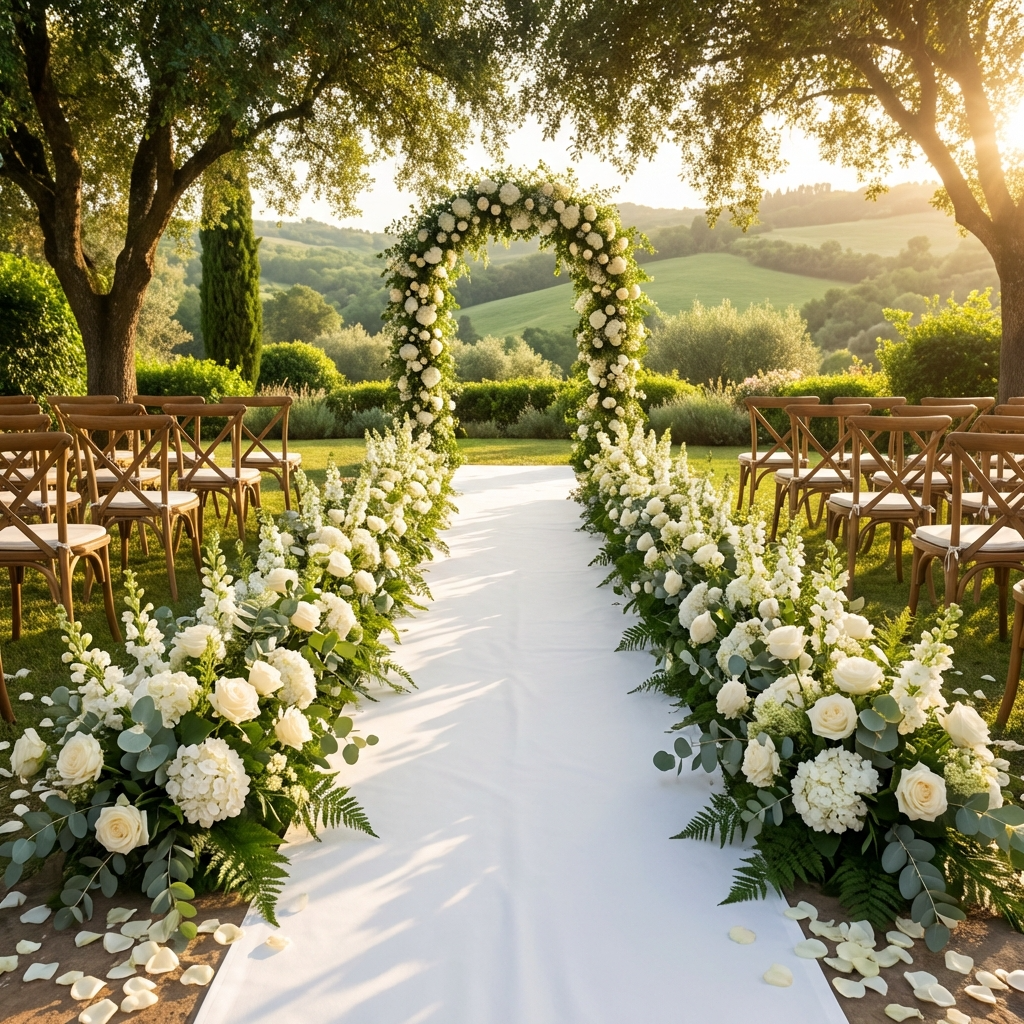
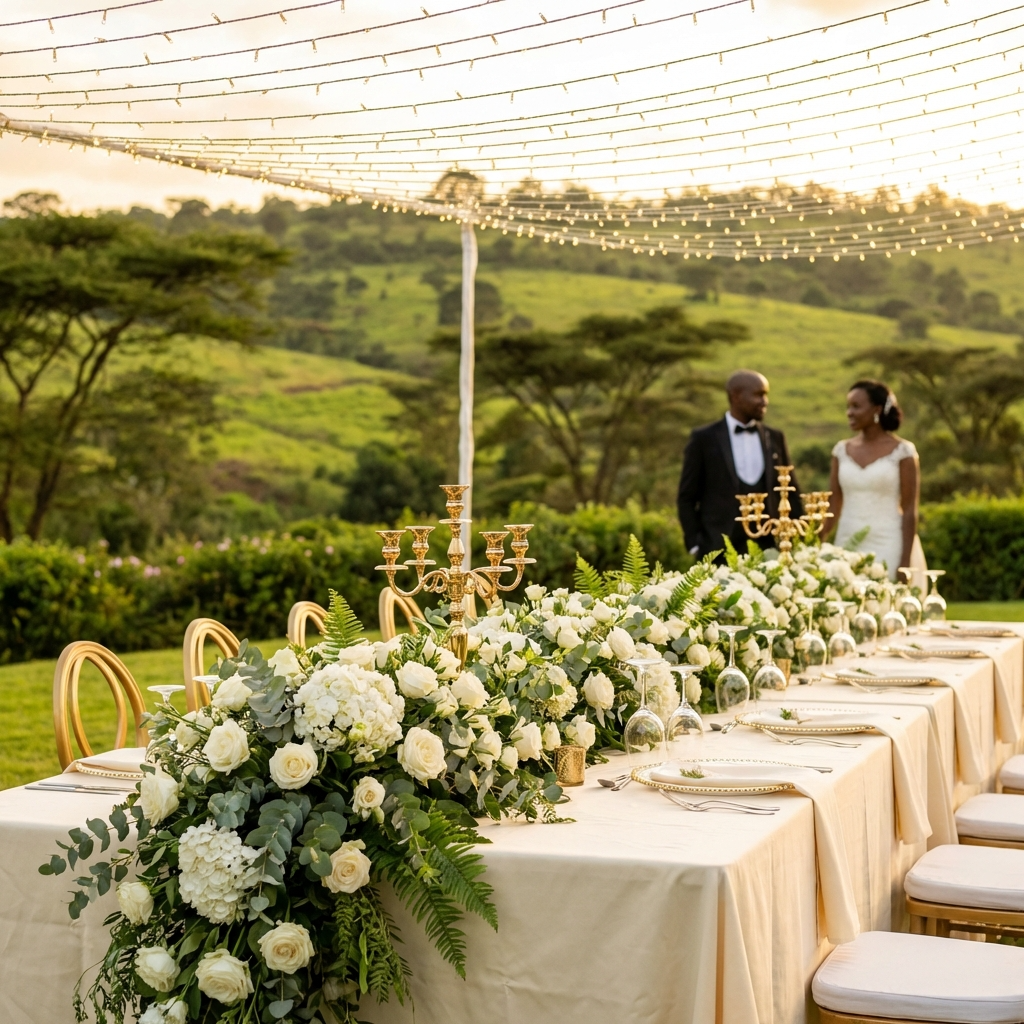
Neither assumption holds in Nairobi. The established décor houses, the ones whose setups you see at the weddings that look genuinely stunning in photos, hold their peak weekend slots tightly. They are not producing generic arrangements that can be reproduced on short notice. A concept-driven floral and décor installation takes weeks of planning, sourcing, and preparation.
The conversation you need to have four to six months out is not "here is my budget, what can you do?" . It should be a detailed brief about vision, colour palette, venue constraints, and priority areas within your budget. If you are less than three months from your wedding and have not confirmed your décor house, this is the most urgent call on your list after venue.
- Whether the quote includes setup and breakdown, and whether that attracts an extra fee
- Whether they have worked at your specific venue before (some houses have restrictions)
- What happens if a key flower variety is unavailable on the day
- What a realistic version of your vision costs at your actual budget, not a polished aspirational one
Photography: the booking most couples regret leaving late
8–10 months The best Nairobi photographers fill peak dates a year in advance. If your first choice is taken, ask them for a referral before cold-searching.
Photography is, for most couples, the one category where they cannot compromise, and it is the one that bites them most often. The best Nairobi photographers in the KES 80,000 – KES 200,000 range are consistently booked eight to twelve months in advance for peak dates. Many of the most in-demand names have moved to enquiry-only models precisely because they are oversubscribed. If you follow a photographer on Instagram and love their work, assume that at least a hundred other couples in Nairobi do too.
The practical implication: once you have a date and venue confirmed, even informally on a soft hold, reach out to your top three photographers immediately. You are not yet fully committed. You are finding out who is available before you fall in love with someone who isn't.
"If your first choice is booked, ask them directly: is there someone you would refer at a similar level? A genuine referral from a photographer you trust is worth more than a cold search."
On engagement shoots: many Nairobi photography packages include a pre-wedding or engagement shoot, and this is worth confirming upfront, not as an afterthought. An engagement shoot is not just a bonus set of photographs. It is your first session together with this specific photographer, and it matters. You learn how they direct you, how they handle light, how comfortable you feel in front of their camera. Couples who have done an engagement shoot with their photographer consistently report feeling more relaxed and natural on the wedding day itself. If a shoot is included in your package, use it intentionally. Choose a meaningful location, dress close to your wedding aesthetic, and treat it as a proper session.
- Whether they are available for your date and whether a second shooter is included
- Whether an engagement or pre-wedding shoot is included in the package or can be added
- How they deliver final images and on what timeline after the wedding
- What their payment structure looks like and what the deposit secures
On videography: if you want both a photographer and a videographer, approach them as a pair. Many Nairobi photographers either have a regular videographer they work with or can recommend one. A well-coordinated photo and video team produces better results than two strangers working the same event independently. Booking them together often means one confirmation conversation instead of two.
- Reach out to your top three photographers as soon as you have a soft venue hold, not after it's confirmed.
- Confirm whether an engagement shoot is included. Use it as a real rehearsal, not a bonus add-on.
- Book photographer and videographer together. Paired teams coordinate better on the day.

Wedding gown and groom's suit: the timeline most couples discover too late
Gown 6–9 months Suit 3–5 months Custom orders cannot be rushed. Off-the-rack still needs 8 weeks minimum for fittings and alterations.
Attire sits in an unusual position in the planning timeline. It is personal, it is deeply emotional, and it is also subject to one of the longest and least forgiving lead times in the entire process. Yet most couples treat it as something to sort once the "real" vendors are booked. This is a mistake, particularly for the bride.
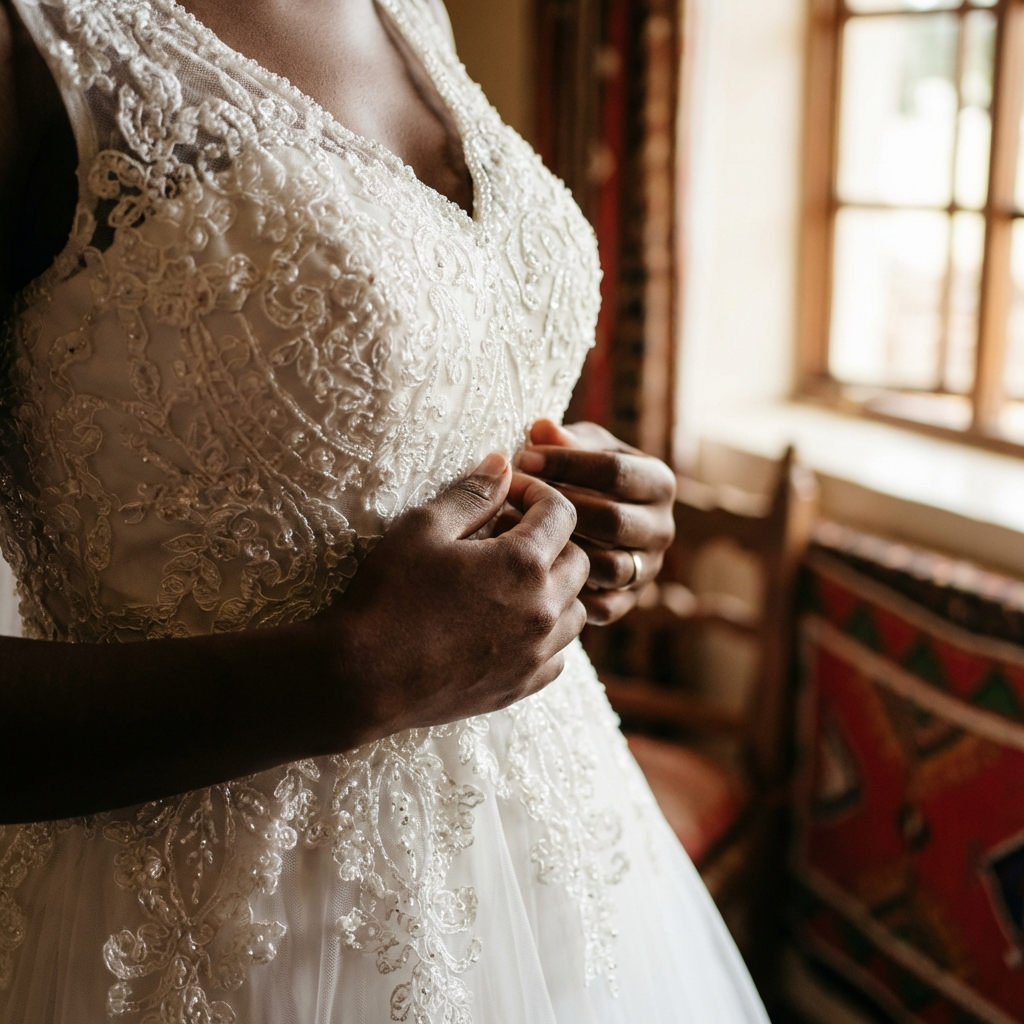
Wedding gown: if you are commissioning a custom or bespoke gown from a Nairobi designer or atelier, six to nine months is the minimum realistic lead time. This accounts for consultation and brief, fabric sourcing, construction, a minimum of two to three fitting appointments, and final alterations. For designer gowns ordered from abroad, whether through a local stockist or directly, shipping lead times can add eight to twelve weeks on top of the local fitting process. The gown you want to walk down the aisle in may need to be commissioned before you have finalised your venue.
Off-the-rack gowns from local boutiques have more flexibility, but "off-the-rack" in practice rarely means "ready to wear." Most gowns require alterations, including hemming, taking in, and bustle adjustments, which typically take four to six weeks with a reputable seamstress. If you are buying off-the-rack, allow at minimum eight weeks before the wedding for sourcing, fittings, and alterations. Twelve weeks is more comfortable.
"The gown you want to walk down the aisle in may need to be commissioned before you have finalised your venue. Factor this into your timeline before anything else is booked."
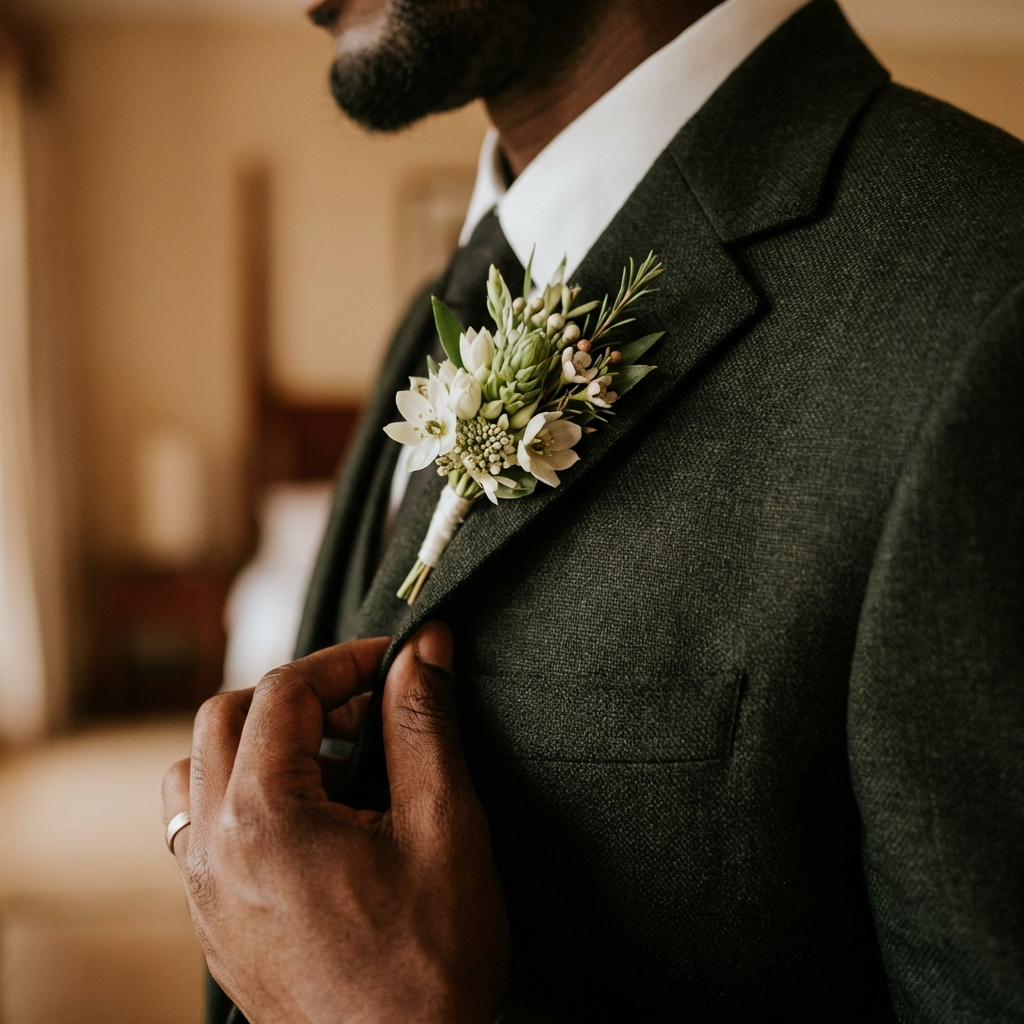
Groom's suit: bespoke tailoring in Nairobi typically takes eight to twelve weeks from initial measurement to final garment. Allow extra time if the tailor has a full order book or if fabric needs to be sourced. The general guidance is to begin the suit process three to five months before the wedding, and earlier for peak season dates when quality tailors are managing multiple wedding orders simultaneously.
If the groomsmen's attire needs to coordinate, this adds another layer of scheduling, as measurements from multiple people need to be taken early, and not everyone will be immediately available for fittings. Start those conversations at the same time as the groom's suit process, not after.
- Whether you are going custom, semi-custom, or off-the-rack. This sets your entire attire timeline.
- How many fitting appointments your atelier or tailor requires and how far apart they should be spaced
- Whether the designer or tailor has your wedding date available, as some take a limited number of bridal commissions per month
- What the alteration timeline looks like for off-the-rack gowns at your chosen boutique
- When groomsmen measurements need to be submitted if suits are being coordinated
- Whether accessories, including shoes, veil, and jewellery, need to be sourced before fittings so hem lengths are accurate
- Custom gowns need 6–9 months minimum. Begin before your venue is fully confirmed if needed.
- Off-the-rack still requires 8–12 weeks for fittings and alterations. Do not treat it as last-minute.
- Source shoes and accessories before final fittings so hem lengths are accurate.
- Start groomsmen measurements at the same time as the groom's suit, not after.
Sound and entertainment: the detail most couples overlook until it's too late
3–5 months Confirm your venue's PA situation first. If it's inadequate, good sound hire companies in Nairobi fill up fast on peak weekends.
Sound is infrastructure. It is not glamorous, it is not the category that gets pinned on mood boards, and it is almost never the first thing couples think about when they start planning. It is also the thing that, when it goes wrong, is noticed by every single person in the room.
A poor sound setup at a Nairobi reception means speeches that cannot be heard beyond the third row, a programme that stalls while someone adjusts levels, and a dancefloor that never quite catches because the bass is muddy or the highs are harsh. Sound is the invisible scaffolding that holds the entire guest experience together.
Not every Nairobi venue has a reliable in-house sound system. Some provide a PA setup adequate for small gatherings but undersized for a reception of 150 or 200 guests. Others have systems that have not been properly maintained. Confirm explicitly with your venue what their sound infrastructure looks like and whether it is sufficient for your event. If not, factor a sound hire company into your budget and timeline.
Good sound companies that specialise in events, rather than general equipment hire, are not abundant in Nairobi. The ones with consistently clean setups and experienced operators tend to have limited available dates, particularly on peak weekends when multiple large events are running simultaneously.
- Whether the venue's in-house PA covers your guest capacity and the size of the room
- Whether they allow external sound companies if the in-house setup is inadequate
- Who is responsible for setup, sound-check, and monitoring throughout the event, not just setup
- For external hire: what is included (speakers, microphones, mixing, on-site technician)
- When the sound team will arrive relative to your programme start time for a proper sound-check
- Whether they have worked at your venue before and are familiar with the acoustics
On entertainment: if you are considering a live band rather than a DJ, book earlier. Live bands, particularly those that can cover a wide repertoire and keep a dancefloor active, have fewer available dates and require more coordination. If you want both a live band for dinner and a DJ for the later reception, confirm both at the same time and brief them together on the programme handover.
The MC: the most underestimated booking in Nairobi
4–6 months The MC is the single biggest influence on reception energy. Do not leave this until two months before the wedding.
Ask any experienced wedding professional in Nairobi what separates a great reception from a forgettable one, and almost everyone will give you the same answer: the MC.
A good MC does not just read a schedule. They read the room. They create energy when it drops, manage transitions between programme items without dead air, handle unexpected changes without breaking composure, and keep guests engaged across a three to five hour reception. The difference between a skilled MC and an average one is felt by every single person in the room, including the couple.
Good Nairobi MCs with genuine crowd management ability are in short supply. The names that come up consistently in couples' research tend to book out four to six months in advance, and earlier for December. Do not leave this until two months before the wedding because you assumed it would be easy to sort.
Catering: where the numbers get real
4–6 months Catering is typically 25–35% of your budget. Confirm early enough to do a proper tasting, not a rubber-stamp exercise six weeks before the wedding.
Catering typically represents the largest single line item in a Nairobi wedding budget, often 25–35% of total spend. This is also the category where the gap between what couples expect to pay and what the market actually charges tends to be widest.
Catering has slightly more lead time flexibility than the categories above, particularly if your venue does not restrict you to an in-house caterer. Four to six months is sufficient in most cases, though for peak dates, earlier is always better. Reputable Nairobi caterers will want a menu consultation, a tasting session, and a confirmed guest count before issuing a final quote. The tasting typically happens six to eight weeks before the wedding. If you want that to actually inform your menu decisions, you need the caterer confirmed well before then.
- What is their per-head cost at your confirmed guest count
- Do they supply their own serving staff, and in what ratio to guests
- What are their terms for a guest count change within thirty days of the wedding
- Do they have prior experience catering at your specific venue
- Who from their team will be on-site on the day and what is their escalation process
so you are a guest at your own wedding.
Once your vendors are confirmed, making sure the day itself runs to plan is a separate challenge. Too many couples try to manage it alone, spending their wedding day fielding calls from the caterer, directing the MC, and chasing transport.
The registry office and legal paperwork: don't leave this until the last month
3–6 months The civil registration is the legally binding act in Kenya. Documents take time. If a lawyer is involved, begin 4–5 months out.
The practical and legal side of getting married in Kenya is its own planning track, and one that operates entirely outside the vendor world. It has its own timelines, its own documentation requirements, and its own consequences if left late.
In Kenya, a civil marriage is registered through the Attorney General's office or a licensed registrar. The process requires notice of intended marriage to be given at least twenty-one days before the ceremony, but in practice, most couples who want a smooth experience begin the process two to three months in advance, or earlier if their situation involves any complexity.
- Original birth certificates for both parties
- National identity cards or valid passports
- Passport-sized photographs
- A death or divorce certificate if either party was previously married
- Completed notice of marriage form submitted to the registrar
- Additional documentation if either party is not a Kenyan citizen. Start earlier in this case.
When to consult a lawyer: most straightforward civil marriages in Kenya do not require legal counsel. However, a brief consultation is worth pursuing if: either party has been previously married and the dissolution documentation is anything less than entirely clear; there are significant assets or liabilities that should be addressed in a prenuptial agreement; or the couple intends to marry under both civil and customary law and needs clarity on which legal framework governs the union. A single meeting with a family law practitioner early in the process costs far less than resolving complications later.
On timing for couples doing civil and church ceremonies separately: the civil registration and the church ceremony are legally distinct events in Kenya. The church ceremony has no legal standing on its own. The registered civil marriage is the legally binding act. Some couples do both on the same day; others do the civil registration quietly in advance and celebrate with a church ceremony and reception on a separate date. Either approach is valid, but confirm your church's requirements early, as some denominations require the civil certificate to be presented before they will conduct a ceremony. Start the paperwork process at least three months before your wedding date. If a lawyer is involved, begin that conversation four to five months out.
Peak season dates: what Nairobi couples need to know
If your wedding falls on a peak date, add 2–3 months to every timeline above. December, January, and August are the three windows where vendor availability tightens fastest.
If your wedding falls on any of the dates below, add two to three months to every timeline recommendation in this article.
What to do if you're already behind
Venue first, this week. Then photographer and décor house simultaneously. Then attire. Do not work through these sequentially. Several need to happen in parallel.
This is the section most people came here for. If you are reading this four or five months before your wedding and you have not yet confirmed your venue, photographer, or décor house, here is what to do, in order.
One more thing worth saying: if you are four months out and you haven't started, you do not have a planning problem. You have a coordination and prioritisation problem. That is a solvable problem, and it is exactly what a professional coordinator handles. If you would like help triaging your vendor list and working through what to confirm in what order, that conversation costs nothing.
together.
Send me a WhatsApp with your date, approximate guest count, and what you've confirmed so far. I'll tell you honestly what's urgent, what can wait, and what your options are, at no cost.
The one booking couples most often leave until it is almost too late
3–6 months Book before your MC. A coordinator briefed early contributes to the whole planning process, not just the day itself.
Day-of coordination. I include this here not to promote my own services, but because as a Nairobi wedding planner I have seen what happens when it is absent. The couple who spent twelve months planning a beautiful wedding, confirmed every vendor, and then spent their actual wedding day managing logistics because no one else was doing it. The caterer who arrived at the wrong entrance because no one was there to direct them. The programme that ran forty minutes late because there was no one to hold the MC to the timeline.
A day-of coordinator is not a luxury for large or elaborate weddings. It is the mechanism by which everything you have planned actually happens the way you planned it.
Book your coordinator before your MC. A coordinator who is briefed on your vendors, timeline, and venue from four to six months out can contribute meaningfully to vendor briefing calls, timeline building, and the final confirmation process, not just show up on the day. That early briefing is what separates competent day-of execution from genuinely seamless coordination.
done the planning themselves.
You've confirmed the vendors. You've built the timeline. The Moment takes over execution, so that on the day, you are fully present for what you actually came for.
The honest summary
In Nairobi, the best vendors are claimed earlier than most couples expect, the peak season windows are real and unforgiving, and the cost of leaving things late is usually losing access to the suppliers you actually wanted.
Start with venue. Book your décor house before it feels urgent. Confirm your photographer and sort your gown in parallel, as both have longer lead times than most people realise. Don't underestimate sound. Start the legal paperwork early. And do not leave the MC until you've sorted everything else.
If you are not sure where you are in the timeline or which gaps to close first, I am happy to help you work through it, no obligation, just an honest conversation.
exactly where you are.
Whether you're twelve months out and want to get ahead, or three months out and need to triage fast. I'm here to help you build a clear path forward.
Dorine is a Nairobi wedding planner and the founder of Sincerely, Dorine. She works with couples across Nairobi on full-service planning and day-of coordination, and writes about the practical realities of planning a wedding in Kenya.