Decor is the part of wedding planning that couples feel most immediately: it is what guests photograph, what fills the mood board, and what you will see in every image from the day. It is also one of the most fragmented parts of the process to manage.
Flowers come from one supplier, draping from another, furniture hire from a third. By the time you have sourced everything, you may have six or seven vendors to coordinate, and none of them will naturally talk to each other. This guide walks you through the core decor elements for a Nairobi wedding: what each one does, what to look for when sourcing it, and, critically, how a wedding coordinator keeps it from unravelling on the day itself.
1. The core decor elements & what they mean
Not every wedding uses every element on this list, and that is perfectly reasonable. The goal is to understand what each piece contributes so that your choices are intentional, not just inherited from a trend board.
For home weddings, garden weddings, and ruracio setups, a hired tent is often the house of the main event. It is not just a decor element; it is the space within which every decor decision is made, held, covered, and brought together. The type of tent you choose, its size, and its condition will shape how your styling lands on the day.
We have covered this in full in a separate guide, including tent types available in Nairobi, what each one costs, and how to style the interior once you have one. Read: Wedding Tent Hire in Nairobi →
Every guest at your wedding will spend the majority of their time seated. Furniture is not a background detail; it is the physical experience of the wedding for most of the people in the room. The table shape affects how guests interact. The chair affects how comfortable they are two hours into the reception. Getting this right matters before you consider any of the decorative elements on top of it.
a. Tables
The two main table formats for Nairobi receptions are round tables and rectangular tables. Most couples use round tables for the main guest seating area.
Round tables are the standard for reception seating. They encourage conversation across the table and work well with centrepiece arrangements. A 10-seater round table is the most common configuration. Hire typically starts at around KES 300–500 per table, though this is usually bundled into a decor package rather than quoted individually.
Rectangular tables are more commonly used for buffet service, the DJ table, the gift table, and the cake table. They are practical rather than decorative. Hire is similar in price to round tables — from around KES 300–500 each; the dressing cost is lower since they are not centrepiece tables.
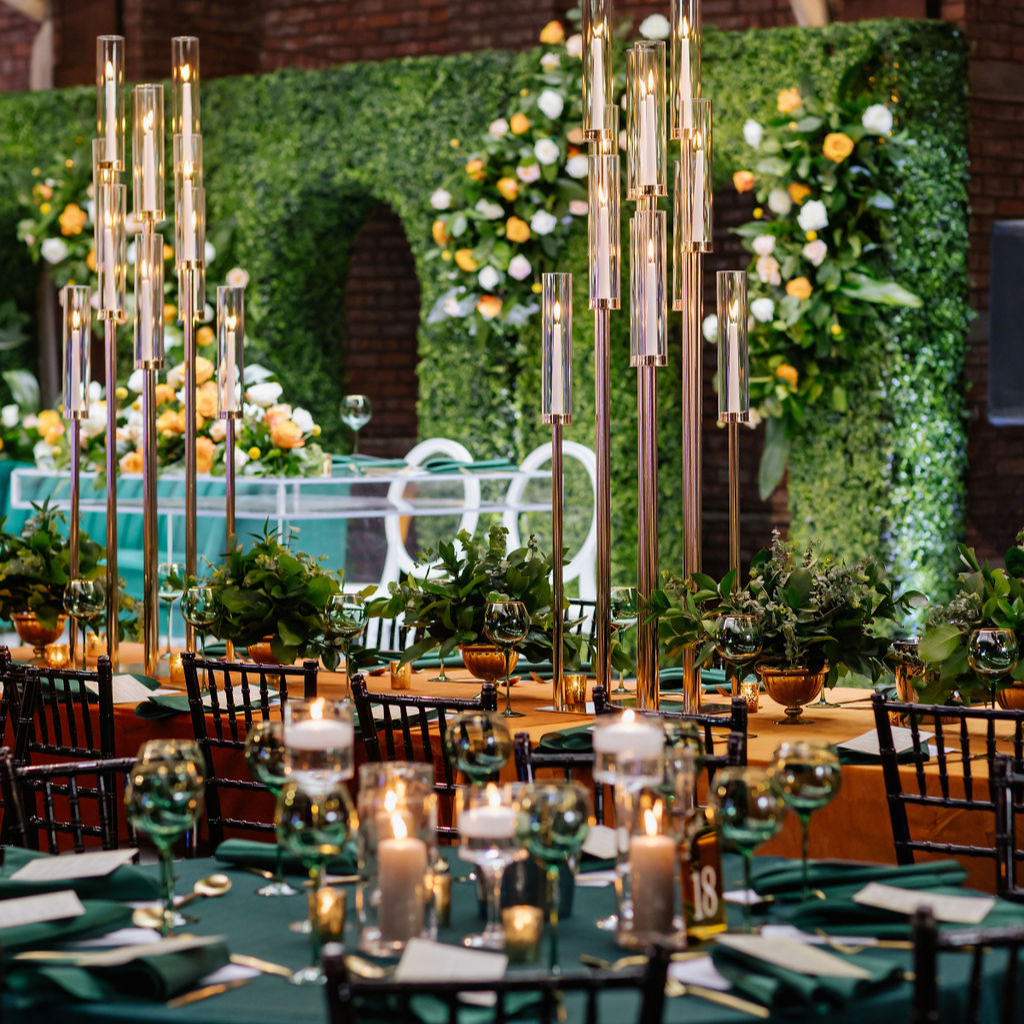
There is a growing trend at Nairobi receptions of using long rectangular tables as the primary guest seating arrangement. A single long table, or a series arranged in rows, creates a banquet feel that photographs particularly well and lends itself to elaborate tablescapes: floral runners down the centre, candelabras, and layered linen. This format works best in larger tent or venue footprints, and requires more deliberate planning since the centrepiece strategy differs entirely from a round table setup. If this is the direction you are considering, brief your florist and linen supplier together from the start.
The high table is a separate consideration. Many couples now opt for a glass-top high table rather than a standard rectangular one; it is a cleaner visual and reads well in photographs. A glass high table hire typically starts at around KES 8,000–12,000. If you want a raised stage beneath the high table, budget an additional KES 20,000–25,000 for a low white platform.
Cocktail tables are used in the drinks reception area or near the bar. They are high, narrow, and designed for standing guests. Hire from around KES 500–800 each.
b. Chairs
Chair choice is one of the most visible decisions in the room; 300 chairs in the wrong style reads immediately in photographs. The main options available in Nairobi:
Chiavari chairs are the most popular choice at Nairobi weddings. Lightweight, elegant, and available in gold, white, and silver finishes. They photograph cleanly. Hire from around KES 150 per chair. For a 300-guest reception, that is KES 45,000 in chairs alone. Gold and white are the most widely available; confirm stock levels with your supplier early in peak season.
Ghost chairs, clear acrylic chairs, give a modern, minimal look and work well in spaces where you want the decor to read rather than the furniture. Typically from KES 200–300 per chair. Gold-frame ghost chairs are a popular variation in Nairobi.
Standard banquet chairs are the default provided by most venues and caterers. If you are not hiring specialty chairs, confirm what the venue provides and whether chair covers or sashes are needed to match your colour scheme.
BUDGET TIP: Dressed plastic chairs are one of the most budget-friendly options available and more common at Nairobi weddings than many couples expect. A plain plastic chair dressed with a fitted cover and sash can look clean and well-finished at a fraction of the cost of Chiavari or ghost chairs, starting at around KES 80 per chair. At scale, the saving is significant. The key is in the dressing: a well-fitted cover in a colour that matches your palette reads far better than a poorly fitted one on a more expensive chair. Confirm the cover style and fit in person before committing to quantities.
Specialty high table chairs, such as Ella chairs, throne-style chairs, or upholstered accent chairs for the couple, are quoted separately, typically in sets of two or four. Prices start at around KES 500–2,000 per chair depending on style.
Always hire chairs for your confirmed guest count plus a 5–10% buffer. Short chair counts at setup are one of the most common last-minute problems and one of the easiest to avoid at the time of booking.
c. Dance Floor
Whether you need a dance floor depends largely on the tent or venue you have chosen. In many Kenyan weddings, particularly those held under high peak or pergola tents, the layout is arranged to leave an open grass courtyard in the centre of the tent cluster or between structures. This courtyard becomes the natural dance space: no hire required, and guests instinctively gravitate to it.
Where a defined floor is needed is primarily in Miluxe and A-Frame tent setups, where the fully enclosed structure means there is no natural outdoor break in the space. Here, a platform dance floor does two things: it defines the dance area clearly within a large interior, and it creates a visual anchor around which the rest of the furniture layout is arranged.
A customised dance floor starts at around KES 35,000–45,000 for a 5m × 5m surface. A standard plain platform is available for less. Size matters: too small and it fills immediately and discourages dancing. The guidance is to plan for roughly 40–50% of your guest count on the floor at any one time. Brief your decor supplier on where the floor will sit before draping and lighting are finalised, as the placement affects both.
Flowers communicate more than colour; they communicate season, formality, and care. When sourcing a florist in Nairobi, ask to see their work across different budgets. Some florists are excellent at large statement installations but inconsistent on smaller table pieces, and vice versa. Confirm when and where the flowers will be sourced, as this affects both cost and freshness on the day.
BUDGET TIP: To bring this line item down, consider hyper-realistic artificial flowers or paper flowers as an alternative to fresh blooms for some or all of the arrangements. Quality has improved significantly, and when well-styled they are difficult to distinguish in photographs. Not all decor suppliers stock them, so ask your decor person directly whether this is an option they can work with.
a. Ceremony Florals
Altar flowers and aisle arrangements frame the ceremony space. Pillar flowers along the aisle walkway are common at church ceremonies and can run from KES 3,000–5,000 per pillar depending on scale. The entrance arch with floral patches is typically the largest single floral investment in the ceremony. Budget from KES 15,000 upwards for a well-dressed structure.
b. Reception Florals
Reception florals cover three distinct areas, each serving a different purpose in the space.
Centrepieces are the primary floral investment at the reception. Whether on round tables, rectangular banquet tables, or the high table, the centrepiece sets the visual tone for the seated experience. Fresh floral centrepieces in Nairobi typically start at around KES 2,500 per table; more elaborate arrangements can reach KES 8,000–15,000 per table. Budget for every table in the room, not just guest tables.
Tent florals are large-scale installations designed to work with the tent structure itself. Floral swags along tent poles, hanging arrangements from the ceiling frame, or garlands along the tent perimeter soften the industrial quality of a tent interior in a way that draping alone cannot. These are best briefed to your florist as part of the overall tent styling conversation, not as a separate afterthought.
Statement floral installations are increasingly used in place of, or alongside, a chandelier as the centrepiece of the reception space. A large suspended floral cloud above the dance floor, a floral arch framing the entrance to the reception, or a dramatic bloom column at the high table creates a focal point that is both photogenic and distinctive. Costs vary widely depending on scale and bloom selection, but budget from KES 25,000 upwards for a statement piece that reads across a large tent or hall.
c. Bouquet Suite
The bridal bouquet is the most personal floral piece and the one that appears in the most photographs. Budgets from around KES 3,500 for a mid-range arrangement. Bridesmaids' bouquets are a separate line item, typically 4–6 pieces at KES 1,500–2,500 each. Budget the full bouquet suite together rather than only the bridal piece; the gap between the two is a frequent surprise in final invoices.
d. Car Florals
Floral decorations for the bridal car and accompanying vehicles are often added as an afterthought and sourced from a different supplier to the main florals. A bonnet arrangement for the bridal car starts at around KES 3,500; flower netting for accompanying cars from KES 2,000–2,500 each. Confirm with your florist early whether car florals are within their scope or whether you will need a separate supplier.
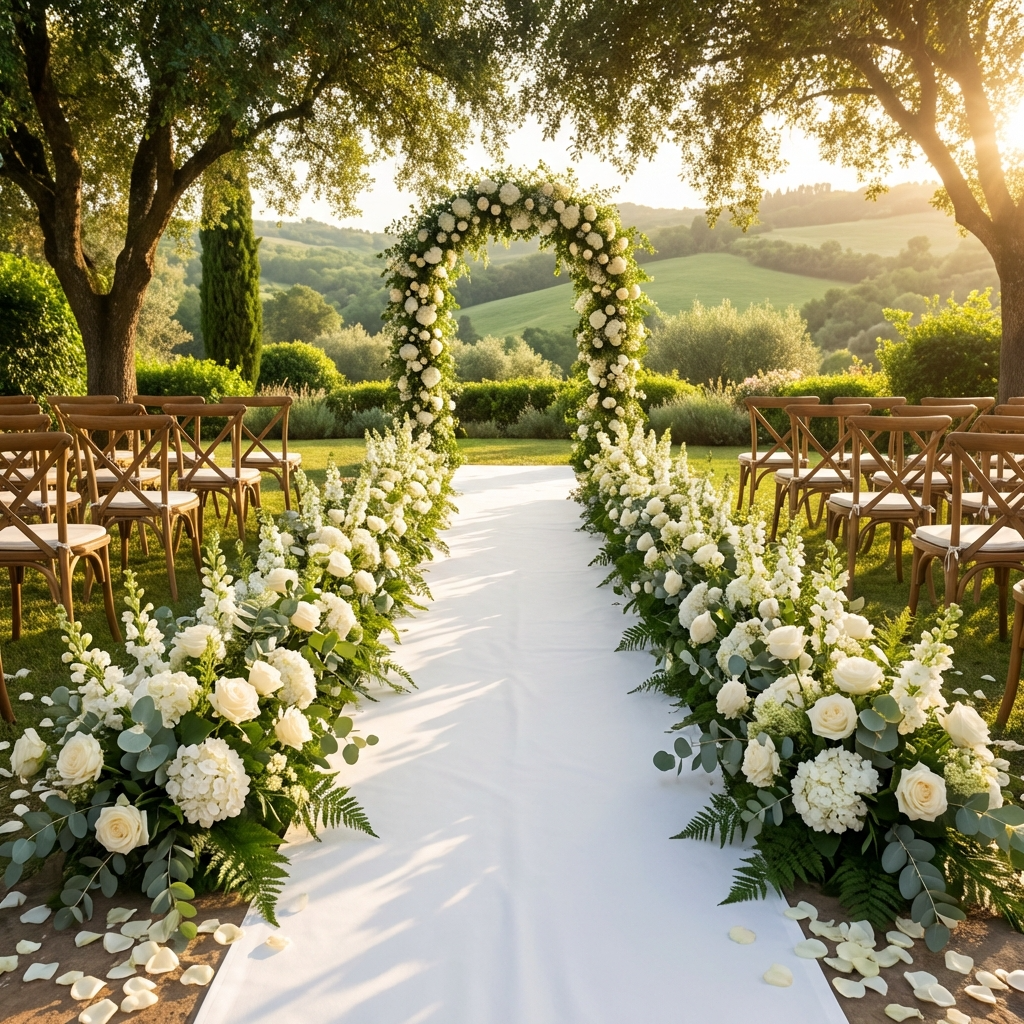
The arch or altar is where you will stand for the most photographed moment of the day. It can be a freestanding geometric frame dressed with flowers and fabric, a natural bamboo structure, or a full floral installation. The scale should relate to the venue; a small garden ceremony calls for a different arch than a large cathedral or hall. Some floral suppliers build and dress arches themselves; others require you to hire the structure separately and bring them in to dress it.
A backdrop serves a similar purpose but extends beyond the ceremony. A dressed backdrop behind the head table frames the couple throughout the reception; a backdrop at the entrance creates a first impression as guests arrive. These are often the same structure relocated after the ceremony. Confirm with your supplier whether that move is included in their quote or charged separately.
a. Photo Booth
A photo booth area has become a consistent feature at Nairobi receptions; it gives guests something to do between courses, produces takeaway moments, and generates content that extends the wedding beyond the day itself.
The setup can be as simple or as elaborate as the budget allows. At its most straightforward: a styled backdrop, good lighting, and a printed sign directing guests to it. A more considered setup includes a dedicated camera or instant print station, a prop basket, and a custom overlay with the couple's names and date.
Placement matters. A photo booth positioned too far from the main reception area will be underused; one placed near the bar or in a natural traffic flow will not. Lighting is critical; a beautiful backdrop with poor lighting produces poor photographs. Ask your lighting supplier to include a dedicated light for the photo booth area. The backdrop can often be repurposed from the ceremony arch, which makes this a cost-efficient addition when planned from the start.
Draping transforms a venue. Ceiling fabric softens a harsh hall and creates intimacy; backdrop draping frames the head table or ceremony arch. In Nairobi, chiffon and organza are common choices for an airy, formal feel, while satin creates a more polished finish. When sourcing, visit the supplier's store or warehouse, as fabric quality varies significantly and photographs can be misleading. Ask to see samples in person and confirm whether installation and collection are included in the quoted price, or charged separately.
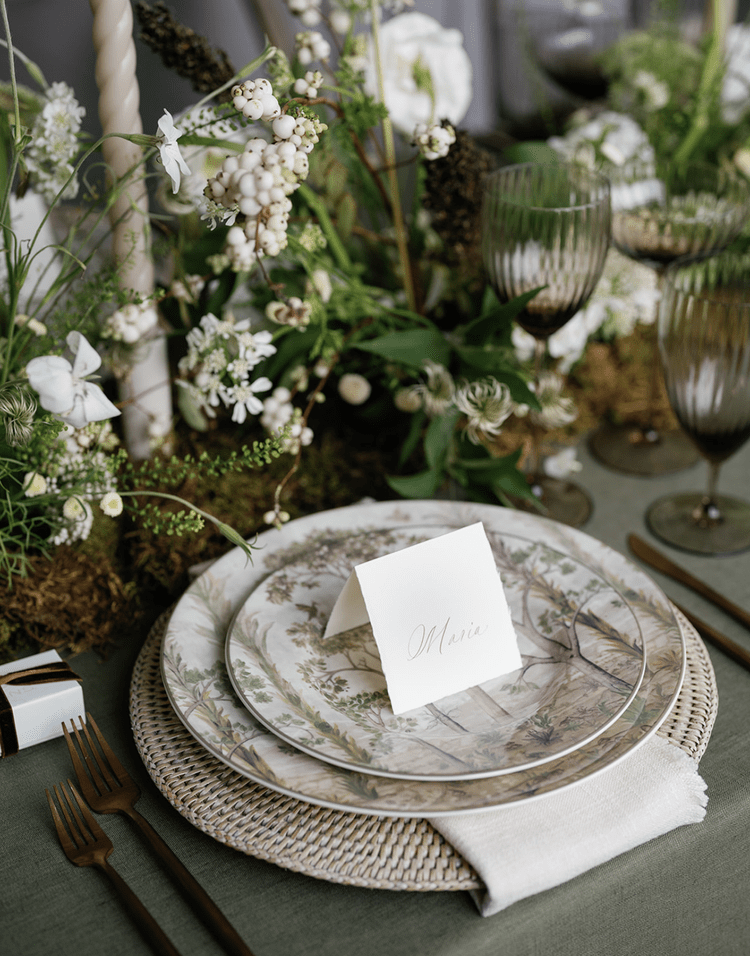
Your guests will spend most of the reception seated, and everything on and around the table shapes their experience of the day. A tablescape is the full composition: the centrepiece, the linen, the charger plates, the napkins, and how they work together as a whole.
a. Centrepieces
Centrepieces set the visual tone. Tall arrangements create drama; low arrangements encourage conversation. Candlestick centrepieces offer elegance at a lower cost than full florals. When budgeting, account for the total number of tables, including the head table, cake table, and welcome table, not just guest tables, as these are frequently under-counted in early quotes.
b. Table Linen
Linen is the canvas on which everything else sits. The colour and texture of your tablecloths affect how flowers and centrepieces read. In Kenya, most venues provide basic white linen as standard; couples who want a specific colour or texture hire from an external linen supplier.
c. Table Runners
BUDGET TIP: A table runner is a strip of fabric, greenery, or dried florals laid down the centre of a table. On round tables, a short runner adds texture and colour beneath the centrepiece. On long rectangular tables, a full-length runner is often the centrepiece itself, with candles, bud vases, and loose blooms arranged along it. Runners are one of the most cost-effective ways to add visual interest to a table; they work well as a standalone treatment on lower-priority tables where a full centrepiece is not in the budget. Runners can be hired from linen suppliers or sourced as dried or artificial arrangements that can be kept and reused.
d. Charger Plates
Charger plates, the decorative base plates placed before the starter is served, have become standard at Nairobi receptions and are typically sourced from decor hire companies. Confirm quantities carefully; short counts create visible gaps on tables.
e. Napkins
Napkins are a small detail with a visible impact. Folded, rolled, or tied with ribbon or twine, they contribute to the overall finish of the table. Napkin rings add another layer of detail for couples who want a more dressed look. As with linen, most venues supply plain napkins as standard; hire from a decor supplier if you want a specific colour, texture, or fold style.
Tablescape pricing in Nairobi varies widely. A simple setup, napkins and a table runner, can start at around KES 500 per table. A fully dressed table with elaborate centrepieces, charger plates, specialty linen, and styled napkins can reach KES 7,500 or more per table. With 20 or 30 guest tables, the difference between those two figures is significant, and it is worth knowing your number before you begin sourcing.
BUDGET TIP: This is also one of the more accessible sections to DIY. Couples who are willing to source materials themselves, including bulk linen, charger plates, and simple centrepieces, can achieve a well-finished result without a full supplier. It requires time, storage space in the days before the wedding, and a reliable setup team on the day. Factor in those practical requirements alongside the cost saving.
BUDGET TIP: For budget weddings, consider reducing the number of tables with elaborate tablescapes. Prioritise the important tables, the high table, the parents' tables, and a few key guest tables, then keep the rest simple with a table runner and minimal dressing. If you have a high guest count, get creative about how tables are arranged: long banquet-style seating, for instance, can reduce the total number of table units you need to dress fully, which brings the overall cost down without compromising the look of the room.
Lighting is often treated as an afterthought in Nairobi wedding planning, yet it has the largest single impact on how photographs turn out and how the space feels in the evening. When sourcing, ask your lighting supplier to walk the venue with you in advance if possible. What looks correct in a showroom behaves differently in a specific space.
a. Fairy Lights
Fairy lights strung across tent ceilings or venue rooflines are the most widely used lighting element at Nairobi receptions. They add warmth and softness and are relatively affordable, from around KES 1,500 per string. For a large tent, budget for 30–40 strings to achieve full coverage rather than a sparse effect.
b. LED Parcan Uplights
LED Parcan lights provide directional uplighting at walls, pillars, trees, or tent perimeters. They create colour and depth in a way that fairy lights alone cannot; they are what make the difference between a space that looks warm and finished and one that still looks like a tent. Budget from around KES 2,000 per unit; a medium-size reception space typically needs 12–20 units for even coverage.
c. Chandeliers & Statement Fixtures
A chandelier above the dance floor is a feature item, visible from across the room, present in wide-angle photographs, and effective at signalling the centre of the space. Crystal chandeliers for event hire start at around KES 15,000–20,000. If your venue or tent has the height and rigging points for one, it is worth including in the brief to your lighting supplier from the start rather than pricing it separately later.
d. Task Lighting
Dedicated spotlights on the cake table, the high table backdrop, and the photo booth area ensure these elements read clearly in photographs regardless of ambient light levels. These are small additions; ask your lighting supplier to include them in the scope rather than treating them as extras.
Seating charts, welcome signs, table numbers, menu cards, and order-of-service programmes are all stationery. They serve a practical purpose: guests need to know where to sit, but they also extend the visual language of the wedding to the smallest details. In Nairobi, there are several local calligraphers and print designers who can produce cohesive stationery sets. Source these early; hand-lettered items in particular require lead time.
a. Programmes & Menu Cards
Order-of-service programmes give guests a roadmap of the ceremony: the order of proceedings, names of the wedding party, hymns or readings, and any participation cues. They are particularly important for church ceremonies and for guests who may not be familiar with the format. Menu cards at the reception serve a similar orientation function, letting guests know what to expect before each course is served.
Both items are an opportunity to extend the visual identity of the wedding into the guest's hands. A cohesive design across programmes and menu cards, matching in font, colour, and print finish, reads as intentional and considered. Source from a local print designer or calligrapher and build in at least three to four weeks for design, printing, and delivery. Last-minute stationery orders are expensive and rarely as well-finished.
b. Welcome Signs & Seating Charts
A welcome sign at the venue entrance or ceremony space sets the tone before a guest has seen anything else. It can be as simple as the couple's names and date on a framed print, or as elaborate as a hand-lettered mirror or acrylic board dressed with florals. It is also one of the most photographed stationery items of the day, so placement and styling matter.
The seating chart is the most practically important piece of signage at the reception. It tells guests where to sit and reduces congestion at the entrance. The two main formats in Nairobi are a printed flat chart on a foam board or framed print, and an acrylic or mirror chart with hand-lettered names. Acrylic charts have become the more popular choice; they photograph well and feel premium without being significantly more expensive than a well-printed flat chart. Whatever the format, ensure it is placed at the entrance to the reception space, at eye level, and with enough space for several guests to read it at once without blocking the flow of traffic.
c. Gift Box & Envelope Holder
A designated gift box or envelope holder is a practical necessity that is often overlooked until the last minute. Guests who bring cards or cash envelopes need somewhere to place them that is clearly visible, secure, and attended. A well-styled gift box, dressed to match the overall decor, also signals to guests that the detail has been considered. Position it at the entrance or near the welcome table where it is easy to find on arrival.
d. Guest Book
A guest book gives people a moment to leave something personal beyond a gift. The traditional format, a lined book with signatures, still works, but many couples now opt for alternatives: a print-your-own-photo book where guests sign around their image, a Polaroid wall where guests attach a photo and a note, or a single large-format card that everyone signs. Place it somewhere with a pen that actually works, good light, and enough space for guests to pause without blocking foot traffic.
e. Wedding Website
A wedding website is one of the most underused tools available to couples planning a Nairobi wedding. It does not replace your printed stationery, but it extends it, handling the information that printed cards cannot practically carry: directions with a map link, accommodation suggestions for out-of-town guests, RSVP collection, dietary requirement forms, and a running schedule of the day's events. A well-built wedding website also reduces the volume of repeat questions you field in the weeks before the wedding.
Sincerely, Dorine offers a full stationery design service, from programmes and menu cards to welcome signs, seating charts, and your wedding website. Everything designed cohesively, managed end to end, and delivered ready to use. Get in touch to find out more.
2. How to source decor suppliers in Nairobi
The Nairobi wedding decor market is active and growing, but it is not always easy to navigate, particularly for couples planning their first event. Here is a practical approach.
2.1 Start with referrals, not Google. The most reliable way to find a good decor supplier is through direct referral: from a recently married couple, a venue coordinator, or a wedding planner. Photographs on Instagram look beautiful; what matters is how a supplier performs on the day itself: whether they arrive on time, whether their quantities match what was agreed, and whether they communicate clearly when something changes.
2.2 Visit suppliers in person before committing. For high-investment items such as florals, draping and furniture, visit the supplier's physical space before signing a contract. This gives you a sense of the quality of their stock and the professionalism of their operation. A supplier who is reluctant to let you visit is a supplier worth reconsidering.
2.3 Get itemised quotes. Ask for quotes that break down each item individually rather than a single package total. This allows you to compare like for like across suppliers, and to make informed decisions about where to invest more and where to simplify. Be explicit about what is included: delivery, setup, teardown, and collection should all be line items.
"The budget conversations that go wrong are almost always the ones where the quote said 'decor' and no one defined what that meant."
2.4 Confirm supplier availability early. In peak wedding season, particularly December and the August school holidays, good Nairobi decor suppliers book months in advance. If you have a fixed date and a venue confirmed, begin conversations with decor suppliers early, even if you are not ready to sign a contract. An informal hold is better than losing a supplier you wanted.
2.5 Ask for references or past client contacts. A reputable supplier should be willing to connect you with one or two previous clients. A brief conversation with a past couple will tell you more about the actual experience of working with a supplier than any portfolio image.
Decor consistently surprises couples as a cost category; not because individual items are expensive, but because there are so many of them. When building your decor budget, cost every table, every room, every transition space. Welcome table, cake table, bar area, photo booth backdrop, restroom signage: these small additions accumulate. Build in a 10–15% contingency before you commit your total figure to suppliers.
Two line items that are frequently missed entirely: delivery and collection, and crew setup and breakdown. For a large wedding these can total KES 80,000–120,000 across multiple supplier trucks and setup teams. Ask every supplier to include these in their quote from the start, not as an afterthought once the rest of the budget is set.
3. Why decor coordination matters on the day
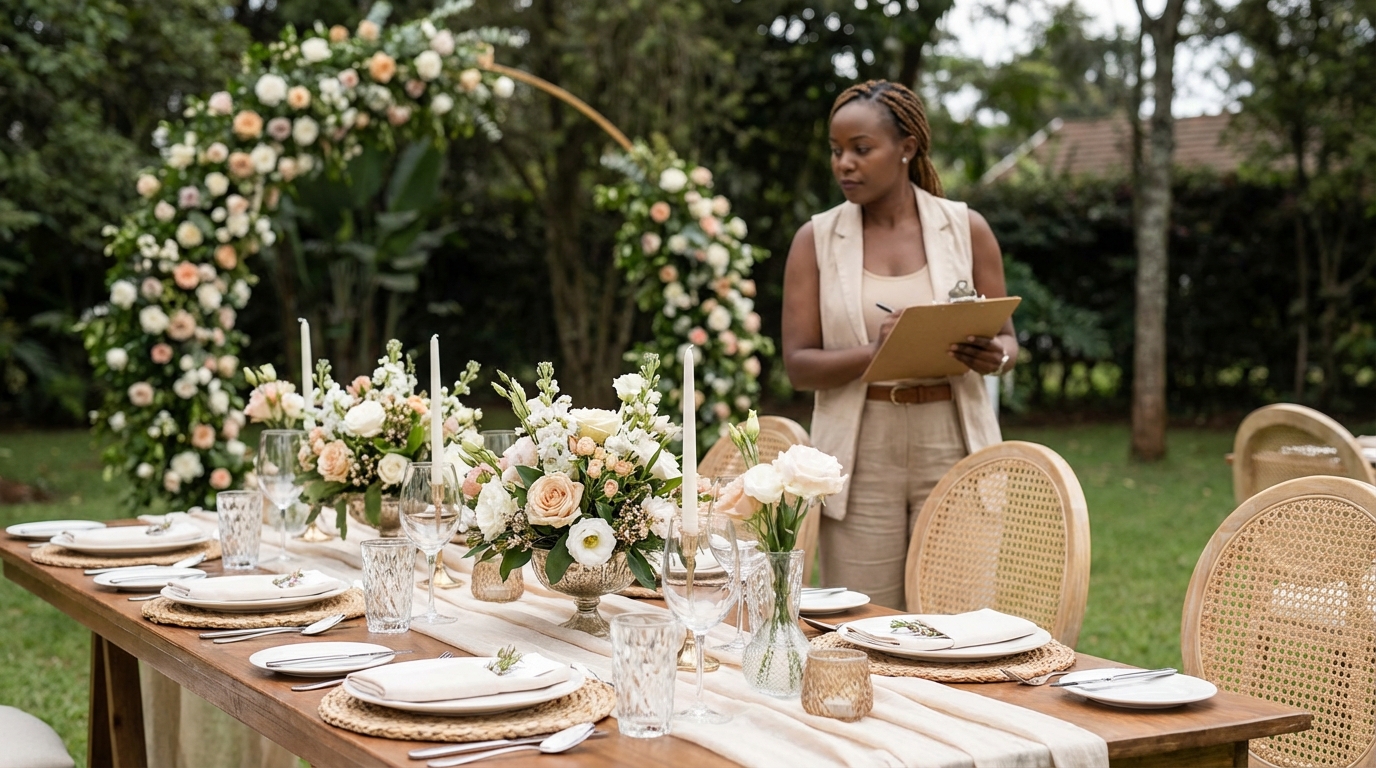
You can source the most beautiful flowers, the most elegant furniture, and the most skilled florist in Nairobi, and still have things go wrong on the morning of the wedding. Not because suppliers are unreliable, but because six or seven independent vendors operating in the same space, on the same timetable, with no single point of contact is a coordination problem by design.
3.1 Managing the setup schedule. A venue is typically available for supplier access from a specific time, often mid-morning or early afternoon on the day. Every supplier needs to set up within that window before guests arrive. The florist needs the draping in place before they can dress the arch. The caterer needs tables set before linen is laid. The order matters, and no one supplier is responsible for managing it. A coordinator builds a detailed setup schedule in advance, confirms it with every supplier, and is present at the venue from first access to ensure it runs in sequence. When a furniture delivery arrives late, they adjust. When a centrepiece count is short, they problem-solve before a guest sees the gap.
3.2 Single point of communication. On a wedding morning, you should not be fielding calls from six suppliers. A coordinator takes all incoming supplier communication from the point they arrive at the venue. Every question, such as where something goes, who to speak to about payment, or whether the florist needs water, is handled without reaching you.
3.3 Quality checking against the brief. A coordinator reviews the setup against the agreed brief before guests arrive. Are the table numbers correct? Has the seating chart been placed at the entrance as agreed? Is the lighting switched on and positioned correctly? These checks happen systematically, not by chance.
3.4 Handling what you did not plan for. A supplier who cannot find the venue. A centrepiece that tips over before the reception begins. A fabric installation that is not sitting correctly. These things happen at weddings, not at every wedding, but often enough that expecting a smooth day with no intervention is optimistic. A coordinator's value is not that they prevent all problems; they resolve problems before those problems become the thing you remember.
"Decor is the most visible part of your wedding. Coordination is what ensures it is also the most consistent."
4. The practical summary
Establish your total decor budget before approaching any supplier. Not a range; a figure. Begin with the highest-priority items: florals, draping, and lighting. Get itemised quotes from at least two suppliers per category and visit in person where possible. Confirm delivery, setup, and teardown logistics before signing. Build in a contingency of at least 10%.
Then, before your setup day, ensure someone is accountable for coordinating every supplier in the same space: their access times, their setup sequence, their communication, and their quality check. The decor at your wedding will be one of the most photographed and remembered parts of the day. It deserves the planning and coordination that matches its visibility.
We run it.
Day-of coordination for couples who have sourced their own decor and want the day to reflect the work they have put in.
✦ Learn about The Moment